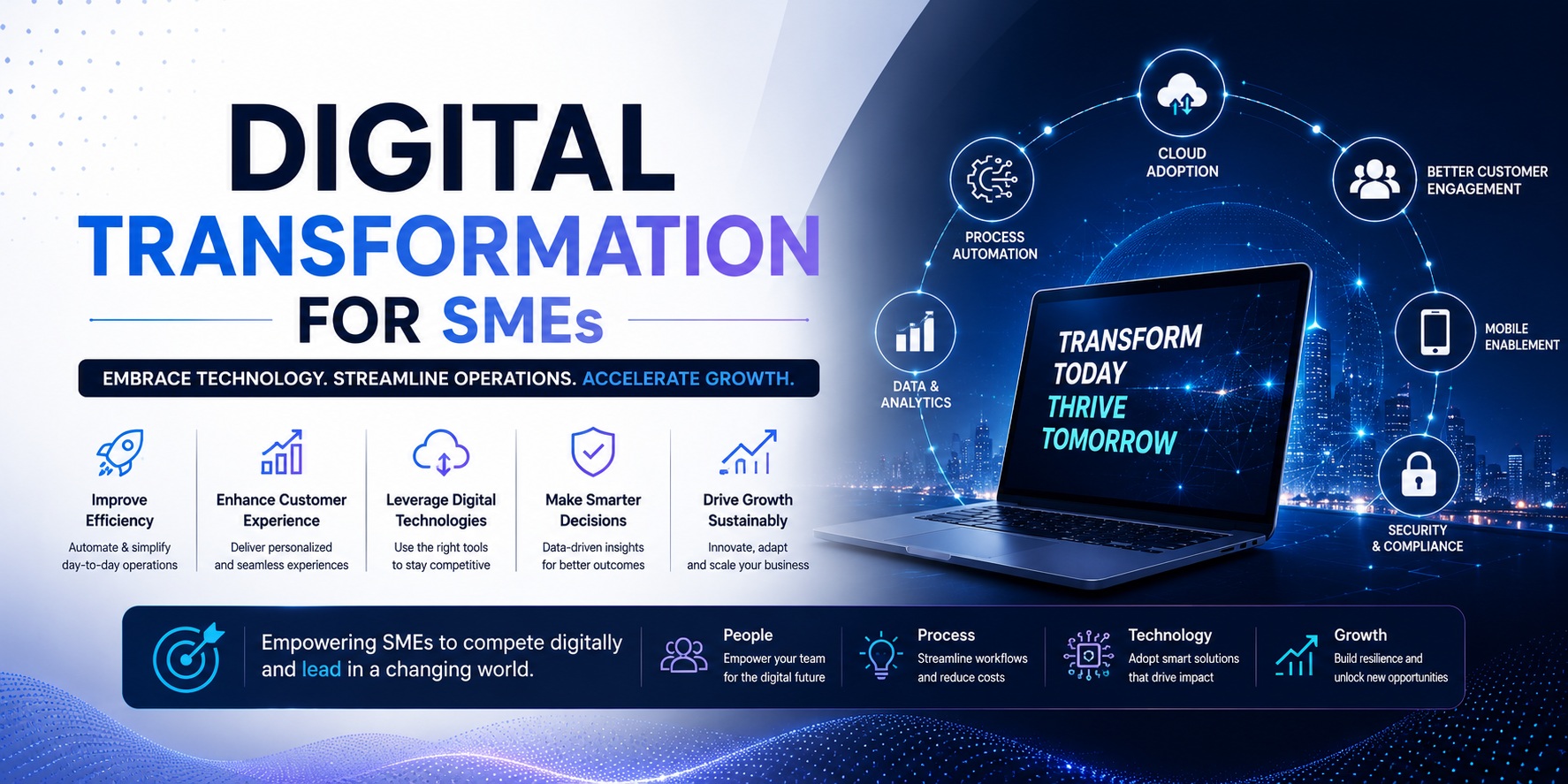
Digital transformation is one of the most overused phrases in business. For most SMEs, it conjures images of large budgets, long timelines, and consultants with slide decks. The reality is far more practical.
What Digital Transformation Means for an SME
For a small or medium business, digital transformation is the process of replacing manual, paper-based, or disconnected processes with digital systems that improve speed, visibility, and customer experience.
It does not require a complete overhaul. It requires a starting point.
Where Most SMEs Actually Are
- Customer data spread across spreadsheets, email inboxes, and memory
- No consistent way to track leads from first contact to sale
- Marketing activity that cannot be measured or attributed
- Operational processes that depend entirely on specific individuals
The Right Starting Point
Start with the process that causes the most friction. Not the most exciting opportunity — the most painful problem. Digitising that one process will produce a visible result quickly, build internal confidence, and create a template for the next step.
Practical First Steps
- Move customer data into a CRM, even a free one
- Set up GA4 on your website if you haven’t already
- Automate at least one repetitive communication — a booking confirmation, a follow-up email, a reminder
Managing the Human Side
Technology is the easy part. The harder part is changing how people work. The most successful digital transformation projects in SMEs involve the team early, explain the why clearly, and start small enough that failure is recoverable.
Transformation is not a project with an end date. It is a direction of travel.